Lapland is rarely chosen by the calendar. Most people choose it by an image — snow, reindeer, the aurora. But the three seasons here are not different versions of the same landscape. They are three different states you can step into, and the difference runs far deeper than temperature.
Summer: Stillness Without Darkness
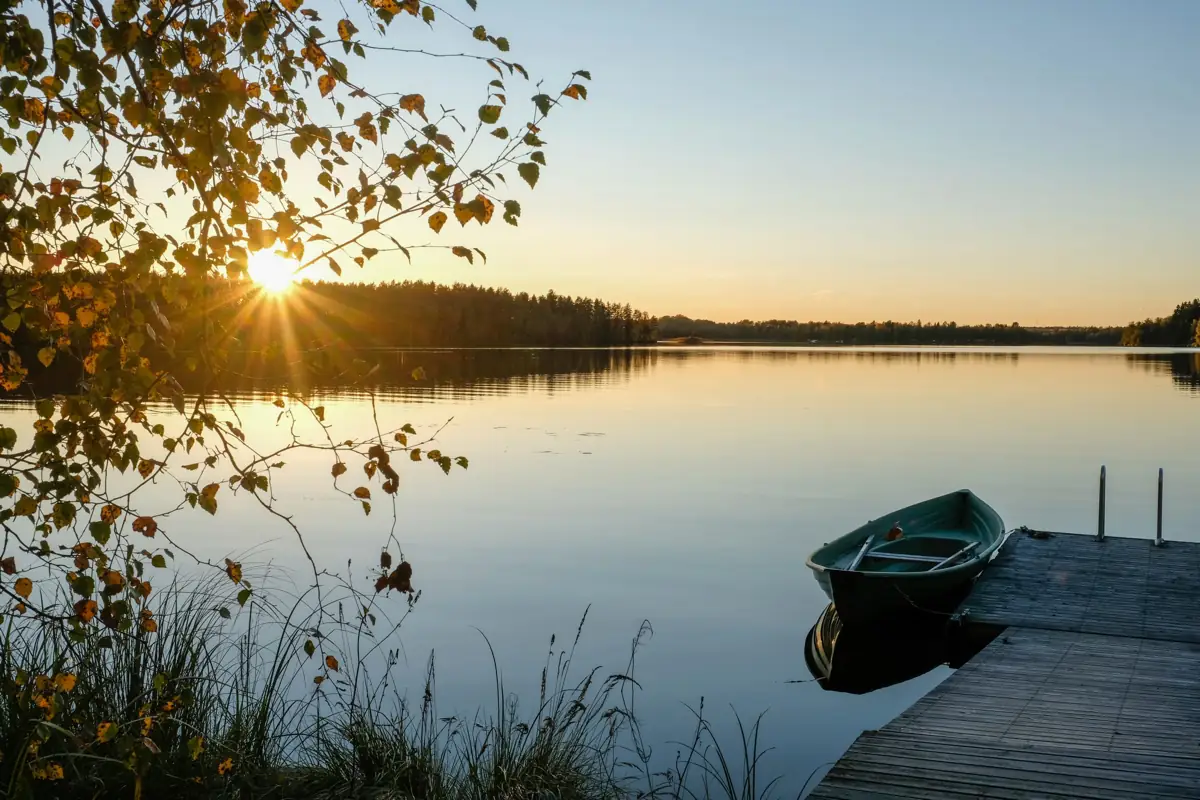
The first thing to understand about a Lapland summer is that night barely arrives. In June, the sun does not set at all; through July and August, it comes close but rarely commits. This is not simply “more daylight” — it is an unfamiliar shift in how time moves. A day with no end has a way of loosening your grip on the clock.
Summer is worth choosing not because it is warm, but because there are few places where you can stand inside a day that refuses to close. The sun holding for weeks changes more than the light — it changes how time feels to move through. Evening never quite arrives, so nothing hurries a conversation to finish, a book by the water to end, or an hour by the fire to close itself off. The body slowly stops checking the time, and that quiet disorientation is the whole point. This is a season for travellers who are not chasing sights but a pause: fishing where the catch matters less than the silence between casts; a lake entered early simply because it is there and no one is waiting; a dinner that stretches for hours because nothing pushes it to end.
A quieter thread runs alongside it — sauna not as an occasional treat but a daily rhythm, mornings by the water, and a short, sharpening swim before breakfast. This sits closer to a practice than to an activity.
Briefly, by location: Inari suits a slower, more cultural pace — Sámi heritage and the stillness of Lake Inarijärvi. Saariselkä offers solitude and trails through Urho Kekkonen National Park. Rovaniemi is the natural point of entry, balancing comfort with proximity to the wild.
Early Autumn: A Season That Cannot Wait
Ruska — the short window when the forest turns yellow, red and copper almost at once — usually lasts no more than a week or two, typically in late September. This is not simply beautiful; it is one of the few things on a journey that genuinely cannot be postponed. That brevity is what makes early autumn distinctive: people come not because it is convenient, but because the moment will not repeat.
Autumn is also a season of attention to detail — the kind that dissolves into light in summer and into snow in winter. Foraging for berries and mushrooms here is rarely just an activity to tick off; more often it becomes the start of a meal, cooked the same evening with a local cook or family for whom this forest is simply part of daily life.
Closer to November, the forest quietens differently — a walk begins to feel less like sightseeing and more like a considered pause: silence before the snow, a forest preparing rather than merely looking picturesque.
By location: Saariselkä offers the best walking trails at the peak of ruska. Inari is at its quietest during this in-between period. Rovaniemi is the first to meet the snow — the point where autumn ends earlier than everywhere else.
Winter: Three Different Winters in One
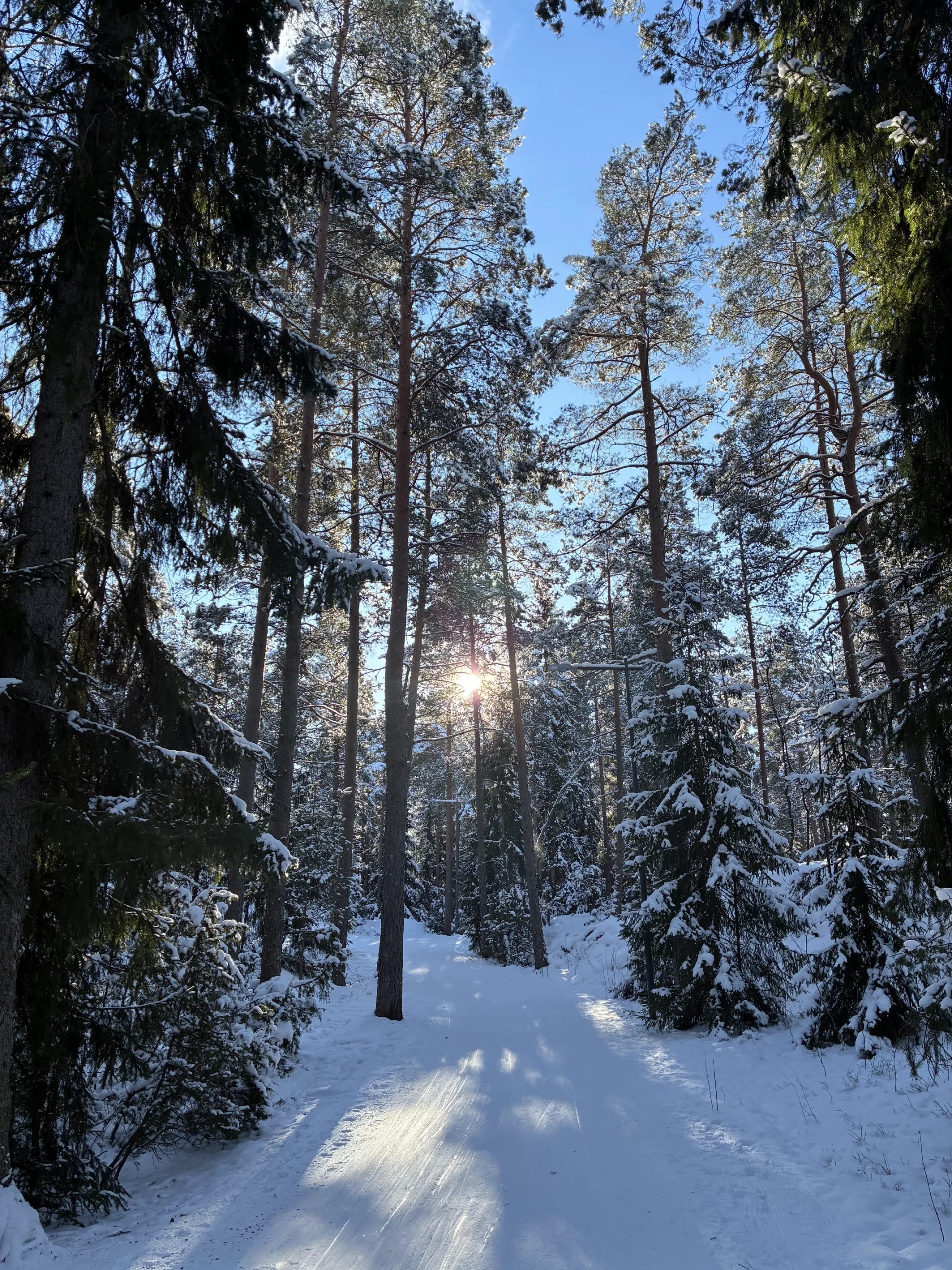
Winter in Lapland runs from November to April — and it is not one season but at least three.
Early winter (November–December) brings snow that is not yet deep and ice that has not fully settled; the landscape is still finding its shape. Deep winter (January–February) means firm, lasting snow, the darkest weeks of the year, and the strongest conditions for the aurora. Late winter (March–April) sees light gradually return, while snow and winter activities still hold — a comfortable window for those who want winter without its darkest edge.
Polar night does not settle evenly across the region. Inari and Saariselkä, both further north than Rovaniemi, hold darker, longer nights. For most people, that sounds like a drawback — but for anyone travelling for the aurora, or simply for a sky dense with stars unreachable near any city, it is an advantage worth stating plainly rather than softening.
This darkness is worth choosing for itself — not as something to endure but as a rare resource: a sky thick with stars, silence in which you can hear snow underfoot, and evenings built around fire and sauna rather than a schedule. The aurora here is not a guarantee — it is a reason to stand under a sky that most of the world simply cannot see. Its visibility depends less on the calendar than on solar activity and cloud cover on any given night, and it is worth saying so honestly, without promises.
What Carries Through All Three Seasons
Strip away the activities, and each season leaves behind its own state to step into: summer is stillness without darkness. Autumn is attention, before the snow arrives. Winter is darkness in which you begin to notice what usually slips past unseen.
Journeys built around any of these windows are shaped with local guides and small family-run operations — people for whom this forest, this lake and this snow are not scenery, but daily life.
Choosing Your Season
Summer is worth choosing not because it is warm, but because there are few places where you can stand inside a day with no end. The sun holding for weeks changes how time itself feels to move through — evening never quite arrives, so nothing hurries the conversation, the book by the water, or the hour by the fire to close. The body slowly stops checking the clock, and that quiet disorientation is the whole point. This is a season for travellers seeking not sights, but a pause: fishing where the silence between casts matters more than the catch, a lake entered early simply because it is there, a dinner that stretches on because nothing pushes it to end. Summer here is a rare chance to be somewhere time stops being something you have to spend carefully.
Early autumn is worth choosing for something you cannot see at any other time of year: a forest that turns yellow, red and copper for a matter of days, then changes again. This is not a backdrop for a walk — it is the reason for one. It draws travellers who care about air that already smells different, the hush of the forest before snow, and the feeling of catching something on the edge of disappearing.
Winter is worth choosing for the darkness itself — not as an absence, but as a rare resource: a sky dense with stars, a silence you can hear snow fall into, and evenings arranged around fire and sauna rather than a timetable. The aurora here is not a promise — it is a reason to stand beneath a sky that most of the world will never see.
If you already know which of the three seasons matches your own rhythm, tell us what you would like to see and feel, and we will build the journey around that — not around a ready-made list.